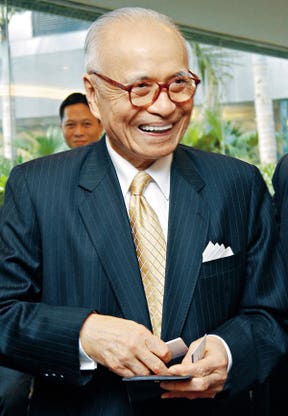
Nan Fung Founder Chen Din Hwa: A Story of Grit, Growth, and Generosity
Chen Din Hwa, the visionary founder of Nan Fung Group, was much more than just a successful businessman; he was an embodiment of the quintessential Hong Kong rags-to-riches story. From an impoverished childhood in mainland China to accumulating a staggering
chen din hwa net worth of $2.6 billion at the time of his passing, his journey is a testament to unwavering determination, sharp business acumen, and a profound commitment to philanthropy. This article delves into the remarkable life of Chen Din Hwa, exploring the intricate layers of his business empire, the challenges of succession, and the enduring legacy of his charitable endeavors.
The Formative Years: From Humble Beginnings to Textile Magnate
Born in 1923 into a poor family in Ningbo, Zhejiang Province, Mainland China, Chen Din Hwa's early life was marked by hardship and a fierce drive to succeed. Formal education was a luxury he couldn't afford; by the tender age of twelve, he was already an apprentice to a silk merchant, gaining invaluable practical experience in the world of commerce. He supplemented his apprenticeship by helping his father in a fledgling textile business, absorbing every facet of the trade. This hands-on learning, coupled with an innate understanding of markets and human nature, rapidly honed his business instincts.
By the time he was just 22, Chen Din Hwa had already ascended to the position of chief manager within the family-owned textile company, which by then operated several shops and factories across bustling Shanghai and his hometown of Ningbo. This early success was not just about hard work; it was about strategic thinking and an ability to foresee opportunities. He understood the burgeoning demand for textiles and positioned his family's enterprise to capitalize on it, laying the groundwork for what would become an unparalleled empire. His foundational experiences in the textile industry instilled in him a disciplined approach to manufacturing, supply chains, and market expansion—qualities that would define his future ventures.
Building a Diversified Conglomerate: The Rise of Nan Fung Group
The year 1954 marked a pivotal moment in Chen Din Hwa's career and the birth of a major economic force: Nan Fung Textiles. While starting in textiles, Chen possessed a remarkable foresight that allowed him to pivot and diversify his investments long before many of his contemporaries. Recognizing the immense potential in Hong Kong's rapidly expanding post-war economy, particularly its burgeoning real estate sector and its strategic position as a global trading hub, he skillfully transitioned Nan Fung.
Under his leadership, Nan Fung evolved from a textile powerhouse into a major property developer and a significant player in the shipping industry. This strategic diversification was key to solidifying his formidable
chen din hwa net worth. His approach to real estate was characterized by long-term vision, acquiring prime land assets and developing them with an eye towards future value, rather than short-term gains. In shipping, he leveraged Hong Kong's port capabilities, building a fleet that supported global trade and further cemented Nan Fung's multifaceted business interests.
The growth of Nan Fung Group was not accidental; it was the result of a deliberate strategy emphasizing innovation, astute financial management, and a willingness to take calculated risks. Chen Din Hwa was known for his hands-on approach, deeply involved in every major decision, ensuring that his vision permeated all levels of the organization. His ability to identify emerging trends and adapt his business model ensured Nan Fung's resilience and continued expansion through various economic cycles. The company’s trajectory is a prime example of how foundational industries can serve as springboards for expansive, diversified ventures, ultimately contributing to a significant personal fortune, as evidenced by
Chen Din Hwa's $2.6 Billion Fortune: From Poverty to Tycoon.
The Billion-Dollar Succession Saga and Legacy Disputes
Despite his immense success in business, Chen Din Hwa's later years were unfortunately marred by a public and protracted family dispute over the control of his vast empire. In 2009, a Hong Kong court declared him incapable of "managing and administering his properties" due to Alzheimer's disease. This ruling triggered a high-stakes succession battle that captivated the public and highlighted the complex challenges faced by ultra-wealthy families in transferring power and assets.
The court appointed his daughter Vivien as the head of Nan Fung, a decision that bypassed her older sister, Angela, who had been a long-time U.S. resident. This move alone signaled potential familial discord, which soon erupted into a full-blown legal battle. Chen's wife, Yang Foo Oi, subsequently sued Vivien, accusing her of exercising undue influence over her ailing father. This bitter feud underscored the delicate balance required in family business governance and estate planning, especially when billions are at stake.
The Nan Fung succession saga serves as a cautionary tale for families running large enterprises. It emphasizes the critical importance of clear, legally sound, and proactively established succession plans. Without such frameworks, the transition of leadership can devolve into costly and emotionally draining disputes, potentially damaging both family relationships and the business itself. For a deeper dive into this contentious period, explore
The Billion-Dollar Succession Battle: Chen Din Hwa's Family Feud. Such conflicts not only impact the individuals involved but also cast a shadow over an otherwise illustrious career, reminding us that wealth management extends far beyond asset accumulation to include thoughtful legacy planning.
A Philanthropic Heart: The D.H. Chen Foundation and Buddhist Principles
Beyond the boardrooms and legal battles, Chen Din Hwa left behind an equally significant legacy: one of profound generosity and compassion. Inspired by Buddhist teachings, he established the D.H. Chen Foundation, a charitable organization dedicated to uplifting society through targeted support in three key areas: education, welfare, and medicine. This philanthropic arm of his legacy reflects a deep-seated belief in giving back and leveraging wealth for the greater good.
The D.H. Chen Foundation has made substantial donations over the years, impacting countless lives. In education, it has supported scholarships, school development, and educational programs, understanding that access to learning is a powerful tool for breaking cycles of poverty and fostering future leaders. In welfare, the foundation has provided assistance to the needy, demonstrating a commitment to social equity and supporting vulnerable populations. In medicine, contributions have aided medical research, healthcare facilities, and public health initiatives, improving well-being and access to care.
Chen Din Hwa’s commitment to philanthropy was not merely an obligation; it was an integral part of his identity, reflecting his personal values and a desire to see others benefit from the opportunities he himself had created. His foundation continues to operate today, guided by the principles he espoused, ensuring that his compassion and foresight continue to make a tangible difference in society, long after his passing on June 17, 2012. This philanthropic spirit ensures that his name is remembered not just for his substantial
chen din hwa net worth, but for the indelible positive impact he had on the community.
Conclusion: The Enduring Legacy of a Hong Kong Titan
Chen Din Hwa's life journey encapsulates the spirit of entrepreneurial drive and the power of vision. From a young apprentice helping his family survive to becoming the 14th wealthiest person in Hong Kong with a colossal
chen din hwa net worth of $2.6 billion, his story is a beacon of what can be achieved through tenacity and strategic insight. He not only built a formidable business empire in Nan Fung Group, diversifying from textiles to property and shipping, but he also cultivated a legacy of profound philanthropy through the D.H. Chen Foundation.
While his later years were complicated by family disputes over succession, the enduring impact of his business acumen and his compassionate giving cannot be overstated. Chen Din Hwa demonstrated that immense wealth can be a catalyst for societal betterment, guided by principles of generosity and a commitment to human welfare. His life remains an inspiring narrative of resilience, ambition, and the ultimate responsibility that comes with great success, solidifying his place as a true titan of Hong Kong's economic and social landscape.